Understanding Rambu Solo’
Rambu Solo’ is a paramount ceremonial event that holds deep significance within Toraja culture, particularly concerning their unique perspectives on death and the afterlife. This elaborate ritual, which can extend over several days, serves as a tribute to the deceased, reflecting the Torajan belief that death is not the ultimate end but rather a transition to the afterlife. The ceremony is steeped in a rich tapestry of traditions, both historical and cultural, providing insights into the values and social hierarchies that characterize Toraja society.
The origins of Rambu Solo’ can be traced back to centuries of animistic beliefs intertwined with the arrival of Christianity. Despite the influence of modern religions, the ceremony retains many traditional elements that honor the connection between the living and the departed. Central to the Rambu Solo’ is the belief that the spirit of the deceased requires a proper send-off, which in turn can ensure the well-being of the family. It also reflects the family’s social status, as extravagant displays of wealth and effort are made to demonstrate respect for the deceased.
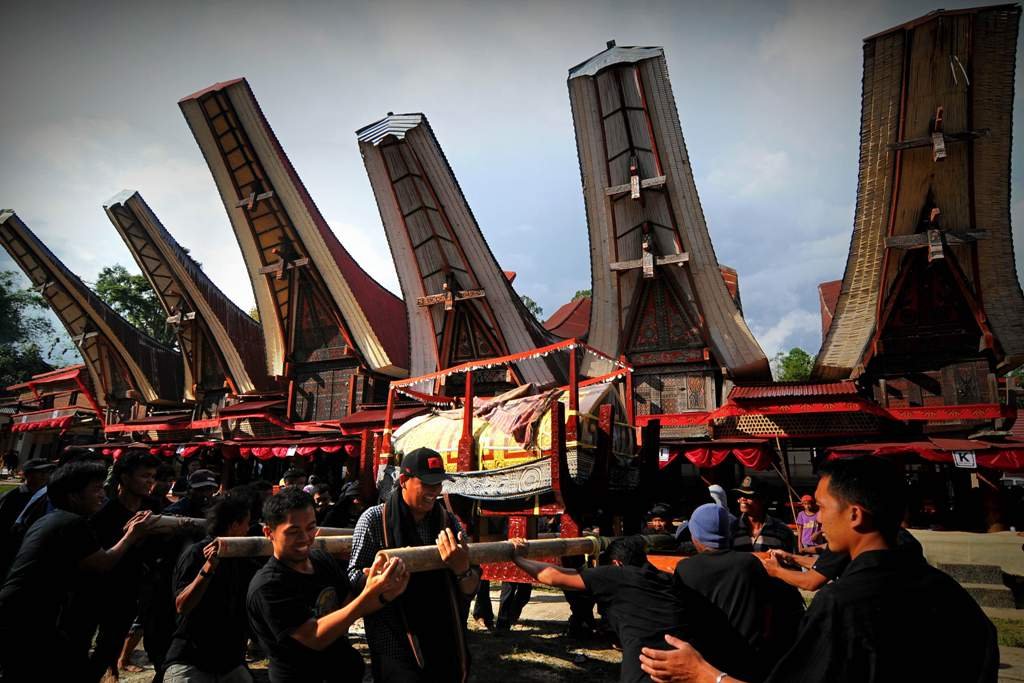
Rambu Solo’ is not a solitary event; rather, it is a communal gathering that reinforces family ties and cultural traditions. The participation of extended family and community members underscores the collective nature of grief and remembrance in Toraja culture. Various rituals are undertaken during the ceremony, from prayers and offerings to animal sacrifices, each symbolizing a passage towards ancestral reverence and connection. The presence of specific artifacts and traditional attire during the ceremony further highlights the unique expressions of Torajan culture. It is through Rambu Solo’ that the Torajan people celebrate life, honor their ancestors, and strengthen the bonds within their communities, illustrating death as a vital component of their social fabric.
The Rituals and Traditions of Rambu Solo’
The Rambu Solo’ ceremony is a profound expression of Toraja culture, encapsulating a rich tapestry of rituals and traditions that honor the deceased. The process begins long before the actual ceremony, involving meticulous preparations for the deceased. Families painstakingly dress their loved ones in ceremonial attire, often choosing vibrant colors and ornaments that reflect the individual’s status and life. This ritual signifies respect and the importance placed on the person’s journey into the afterlife.
During the Rambu Solo’ ceremony, grief is expressed through various means, including elaborate mourning rituals that vary from family to family. Traditional music and dance play a pivotal role in these ceremonies, creating an atmosphere that merges sorrow with celebration. Musicians often perform using traditional instruments, providing harmonic soundscapes that resonate with the cultural values of the community. Dancers, adorned in traditional attire, reenact stories of the deceased’s life, offering continuous homage to their memory.
Integral to the Rambu Solo’ rituals is the practice of making offerings to the deceased. These offerings typically include food, personal belongings, and money, all of which are placed beside the body to accompany the spirit on its journey into the afterlife. Additionally, animal sacrifices such as buffaloes and pigs are conducted, each animal representing an offering that influences the deceased’s passage to the spirit world. The slaughter of these animals is not simply a token gesture; it signifies a profound connection to ancestral spirits, who are believed to guide the deceased during their transition.
This intricate blend of rituals during Rambu Solo’ exemplifies how the Toraja people embrace death not merely as an end, but as a significant moment in the continuum of life. The juxtaposition of mourning and celebration unveils the profound respect held for both the departed and the living—a unique perspective that showcases the essence of Toraja culture.
Cultural Significance of Rambu Solo’ in Modern Society
The Rambu Solo’ ceremony is deeply rooted in the Toraja culture and serves as a pivotal event in modern society, reinforcing the community’s cultural identity amid the pressures of globalization. As contemporary Toraja society navigates the challenges of modernization, the Rambu Solo’ has evolved, adapting to new realities while preserving its traditional essence. This adaptability is crucial for maintaining its relevance, as it continues to play a vital role in various aspects of community life, including social cohesion and identity formation.
Tourism has significantly impacted the Rambu Solo’, with an influx of visitors eager to experience the vivid cultural expressions found within the ceremony. This growing interest has prompted local communities to showcase Rambu Solo’ in a manner that is accessible to outsiders. Consequently, the ceremony has adapted by incorporating elements that appeal to tourists while still retaining its core traditions. The balance between authenticity and presentation is a crucial aspect of this cultural adaptation, ensuring that Rambu Solo’ remains a profound expression of Toraja identity.
Moreover, the emphasis on Rambu Solo’ has fostered a sense of continuity among the Torajan people. The ceremony serves not only as a means of honoring the deceased but also as a celebration of life that strengthens familial and community bonds. In this way, Rambu Solo’ functions as a conduit for cultural transmission, as older generations impart traditional knowledge to the younger ones. Despite the effects of globalization, the commitment to preserving traditional practices is evident in how communities strive to uphold the values, rituals, and ceremonies associated with Rambu Solo’.
In essence, Rambu Solo’ transcends mere tradition, becoming a symbol of resilience for the Torajan community. By embracing modern influences while safeguarding their cultural heritage, the Torajans reinforce their identity, making Rambu Solo’ a significant ceremony that is both timeless and timely in today’s world.
Personal Reflections and Stories of Rambu Solo’
The ceremony of Rambu Solo’ serves as much more than a mere ritual of mourning; it embodies a deeply woven tapestry of personal stories and emotional experiences that resonate with the Toraja people. Many individuals recount how their first encounter with Rambu Solo’ shifted their perceptions of mortality and community. For numerous participants, the event is not solely an acknowledgment of death, but a vibrant celebration of life that invites both reflection and connection.
Consider the story of a woman named Siti, who attended her grandmother’s Rambu Solo’. She describes the environment of the ceremony as both somber and festive, imbued with colors, music, and the aroma of traditional food. “In the midst of the mourning, I felt a profound sense of togetherness that I had never experienced before. It was as if we were all celebrating my grandmother’s journey, rather than only grieving her absence,” she recalls. For Siti, this ceremony reshaped her understanding of death as an intrinsic part of life, further strengthening her bonds with her family and community.
Other narratives echo similar sentiments. A participant named Jaya reflected on his first Rambu Solo’, expressing how witnessing the communal gathering expanded his appreciation of the cultural connections that are fostered during times of loss. “Everyone came together—family, friends, and even those I had never met. It illustrated how death can unite us, drawing strength from shared memories and experiences,” he said. Jaya’s experience illustrates how Rambu Solo’ has the power to transcend individual grief, fostering solidarity among community members amidst profound sorrow.
Thus, the emotional and spiritual dimensions of Rambu Solo’ reveal a rich interconnectedness, urging those involved to commemorate lives while reaffirming communal ties. These personal experiences resonate with the very essence of Rambu Solo’, highlighting its significance in shaping views on mortality and communal bonds within Toraja culture.