Best Time to See Manta Rays in Komodo
If you’re planning a trip to Komodo National Park, one of the most exciting marine encounters you can experience is swimming alongside majestic manta rays. Understanding the Best Time to See Manta Rays in Komodo can significantly increase your chances of witnessing these gentle giants in their natural habitat.
Komodo National Park, located in eastern Indonesia, is renowned not only for the famous Komodo dragons but also for its rich marine biodiversity. The park’s nutrient-rich waters attract large numbers of reef manta rays throughout the year, making it one of the world’s top destinations for manta ray encounters.
Understanding Manta Rays and Their Habitat
Manta rays are among the largest and most graceful creatures in the ocean. Belonging to the Mobulidae family, they can reach wingspans of up to 8.8 meters (29 feet). Unlike stingrays, manta rays do not have a stinger and are completely harmless to humans.
These intelligent animals feed primarily on plankton, small fish, and microscopic marine organisms. They often gather in areas where ocean currents bring nutrient-rich waters, creating ideal feeding grounds. Manta rays are also known for their social behavior, frequently swimming in groups and visiting cleaning stations where small fish remove parasites from their bodies.
Komodo National Park provides the perfect environment for manta rays due to its healthy coral reefs, strong currents, and abundant food supply. The park’s diverse underwater ecosystems support both resident and migratory manta populations, making sightings possible throughout the year.
Best Time to See Manta Rays in Komodo National Park
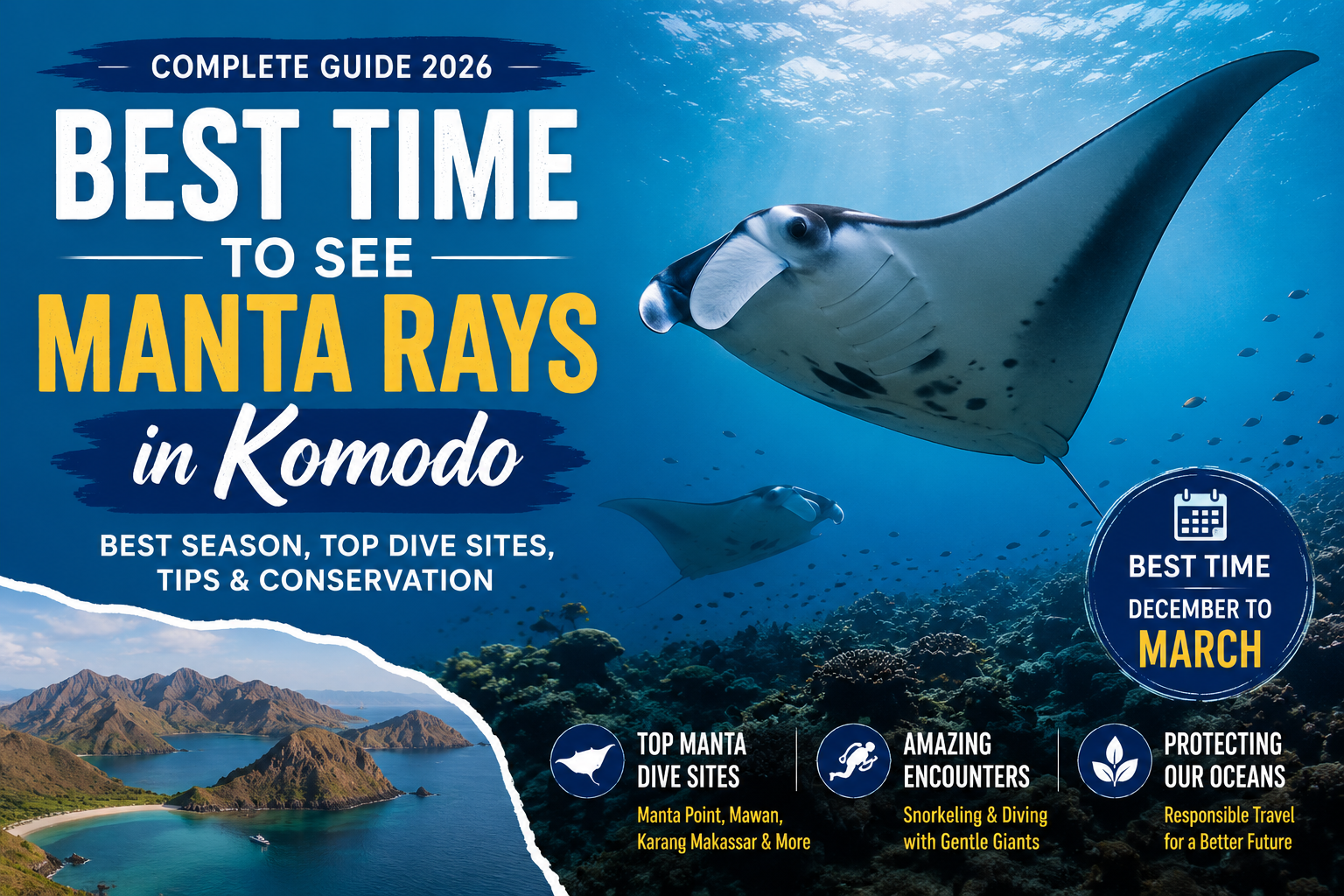
The Best Time to See Manta Rays in Komodo is generally between December and March. During this period, the rainy season brings nutrient-rich waters that stimulate plankton blooms, attracting large numbers of manta rays to feeding and cleaning stations.
December to March: Peak Manta Ray Season
This period offers the highest chances of manta ray sightings because:
Plankton concentrations are at their peak.
Manta rays gather in larger numbers to feed.
Water temperatures remain comfortable between 27°C and 29°C.
Encounters are more frequent for both divers and snorkelers.
January and February are often considered the absolute best months, as manta ray activity reaches its highest levels.
April to November: Good but Less Predictable
Although manta rays can still be seen during the dry season, sightings may become less consistent. Water temperatures range from 25°C to 27°C, and reduced plankton availability means manta rays may move between different feeding areas.
For travelers who prefer calmer weather and better visibility, the dry season can still provide excellent diving experiences, even if manta ray encounters are slightly less predictable.
Top Places to See Manta Rays in Komodo
Manta Point
Manta Point is the most famous location for manta ray encounters in Komodo National Park. The site features shallow cleaning stations where manta rays regularly gather. Divers and snorkelers often witness multiple manta rays circling gracefully in the current.
Mawan
Mawan is another excellent site known for its sandy bottom and cleaning stations. The calm conditions make it suitable for snorkelers and beginner divers hoping to see manta rays up close.
Karang Makassar (Manta Point 2)
This long reef area is one of the best feeding grounds for manta rays in Komodo. During peak season, visitors can often encounter several manta rays during a single dive or snorkeling session.
Diving and Snorkeling Tips for Manta Ray Encounters
To maximize your chances of seeing manta rays in Komodo:
Visit during the peak season from December to March.
Join experienced local guides who know current manta ray locations.
Arrive early in the morning when marine activity is often highest.
Maintain a respectful distance from the animals.
Never chase, touch, or block the path of a manta ray.
Following these guidelines ensures a safer and more enjoyable experience for both visitors and marine life.
Conservation Efforts Protecting Komodo’s Manta Rays
Despite being protected species in Indonesia, manta rays face ongoing threats from climate change, habitat degradation, plastic pollution, and illegal fishing activities.
Komodo National Park has implemented several conservation measures, including:
Marine Protected Areas (MPAs)
Sustainable tourism regulations
Scientific monitoring programs
Educational initiatives for local communities and visitors
Responsible tourism plays a crucial role in protecting manta ray populations and preserving Komodo’s marine ecosystems for future generations.
Conclusion
The Best Time to See Manta Rays in Komodo is between December and March, when plankton-rich waters attract large numbers of these magnificent creatures. Whether you’re diving at Manta Point, snorkeling at Mawan, or exploring Karang Makassar, Komodo National Park offers some of the world’s most unforgettable manta ray encounters.
For the best experience, choose a trusted local operator who understands manta ray behavior and supports sustainable tourism practices. By visiting responsibly, you’ll not only enjoy a once-in-a-lifetime adventure but also contribute to the protection of Komodo’s incredible marine environment.
Book Your Komodo Manta Ray Adventure with Flores Pristine Tour & Travel
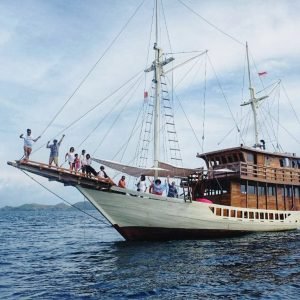
Looking for the best manta ray experience in Komodo National Park? Flores Pristine Tour & Travel offers private Komodo tours, snorkeling trips, diving excursions, and customized liveaboard adventures designed to maximize your chances of seeing manta rays during the best season. Explore Komodo with knowledgeable local guides and discover the wonders of Indonesia’s most famous marine paradise.